Featured
Table of Contents
- – The Expanding Demand for Financial Debt Forgiv...
- – Personal bankruptcy Therapy: The Misunderstood...
- – Contrasting Your Financial Obligation Alleviat...
- – What Sets Nonprofit Therapy Apart
- – Indication of Aggressive Financial Debt Relief...
- – Taking the Initial Step Toward Recuperation
- – The Course Forward
Economic stress has ended up being a specifying quality of modern American life. With total charge card financial debt going beyond $1.21 trillion and the typical cardholder owing more than $6,500, numerous people locate themselves caught in cycles of minimum payments and intensifying passion. When charge card rate of interest hover around 23%, also modest balances can balloon right into overwhelming problems within months.
For those sinking in the red, the inquiry isn't whether to seek help-- it's finding the best kind of aid that won't make issues worse.
The Expanding Demand for Financial Debt Forgiveness Solutions
Debt mercy has actually arised as among the most browsed economic subjects online, and for excellent reason. The principle of resolving debts for much less than the sum total owed offers authentic hope to individuals that see no practical path to paying their balances completely.
The process normally works similar to this: when bank card accounts go unpaid for 120 days or more, creditors frequently charge off the financial obligation. At this stage, they might approve reduced negotiations to recoup at the very least a portion of what's owed. Effective arrangements can lower balances by 30% to 50%, depending on the creditor and your shown economic hardship.
Nonetheless, financial debt forgiveness isn't cost-free money. Settled accounts appear on credit report records as "" paid less than full balance,"" which affects your score. Furthermore, forgiven quantities surpassing $600 may be reported to the IRS as gross income. Understanding these trade-offs before seeking settlement is essential.
Personal bankruptcy Therapy: The Misunderstood Safety Web
Insolvency carries substantial stigma, yet it remains a reputable legal device made to give overwhelmed individuals a real fresh beginning. What lots of people don't understand is that government regulation calls for 2 counseling sessions prior to and after filing-- and these sessions exist particularly to ensure you're making an informed decision.
Pre-bankruptcy debt counseling involves an extensive review of your income, financial debts, and expenditures. Qualified therapists present choices you could not have actually thought about, consisting of financial obligation management programs or hardship arrangements. This isn't about discouraging personal bankruptcy; it has to do with verifying it's really your ideal alternative.
Post-bankruptcy debtor education prepares you for monetary success after discharge. You'll discover budgeting strategies, saving techniques, and credit rating restoring approaches designed to prevent future monetary difficulties.
Organisations like APFSC offer both required courses, with costs around $19.99 per session unless you get difficulty waivers. Their certified therapists offer same-day certificates, and sessions normally run 60 to 90 minutes. This ease of access issues when you're currently emphasized regarding finances.
Contrasting Your Financial Obligation Alleviation Options
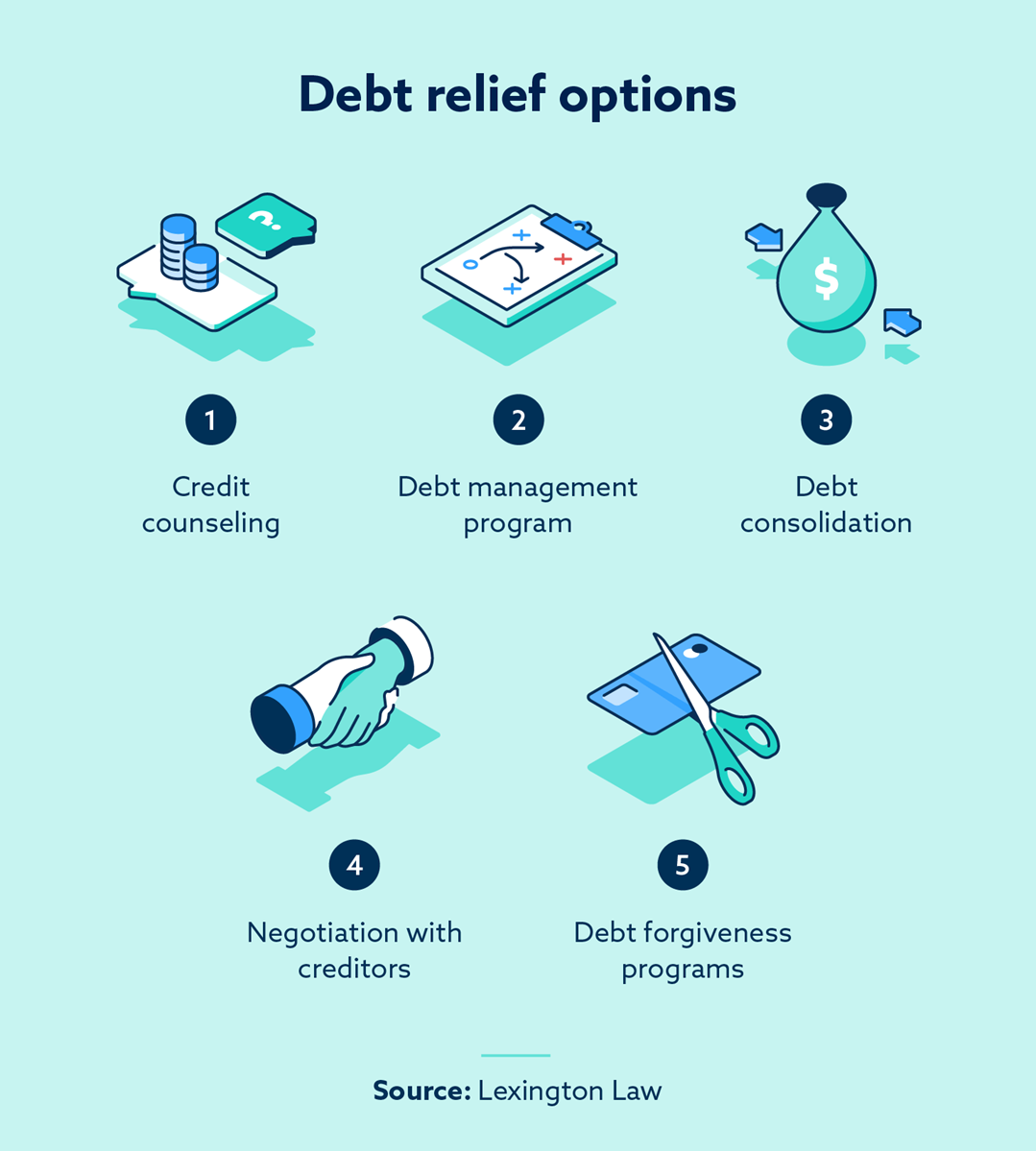
Recognizing the landscape of debt relief assists you make informed decisions. Each method brings unique benefits and drawbacks.
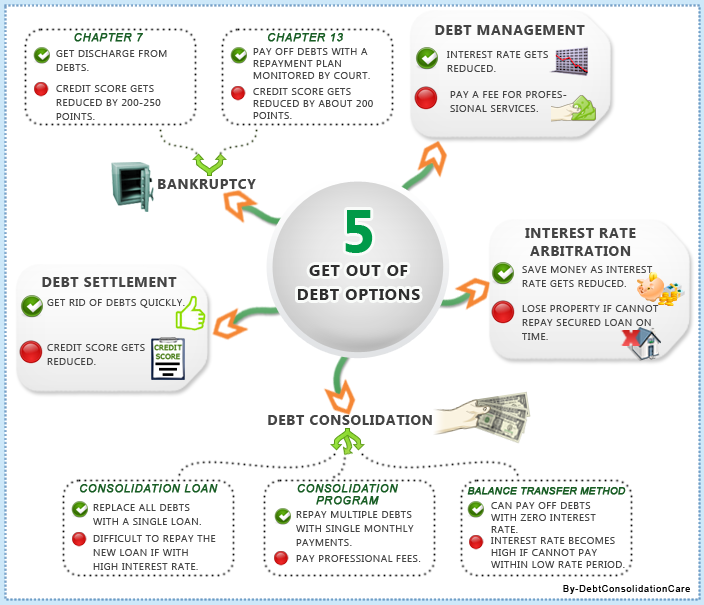
Debt Administration Programs consolidate numerous unsecured financial debts into solitary month-to-month settlements. Therapists discuss with lenders to potentially minimize rate of interest prices without needing brand-new finances. A lot of clients complete these programs within three to five years. The main advantage is paying debts in full while reducing total rate of interest paid.
Debt Settlement bargains minimized benefit quantities, generally 30% to 50% much less than owed. This strategy needs stopping payments to financial institutions while building up settlement funds, which harms credit history throughout the process. Outcomes differ based on creditor readiness and your demonstrated hardship.
Personal bankruptcy gives court security while getting rid of or reorganizing financial debts. Chapter 7 liquidates particular assets to discharge unsafe debts rapidly. Phase 13 establishes three-to-five-year repayment prepare for those with normal earnings. Insolvency remains on credit score records for seven to 10 years however offers the most thorough clean slate.
Debt Counseling supplies education and guidance without always signing up in formal programs. Licensed counselors review your total financial image and advise suitable next steps, which might consist of any one of the above options.
What Sets Nonprofit Therapy Apart
The distinction between nonprofit and for-profit financial debt alleviation companies matters immensely. Nonprofit agencies like those certified by the National Structure for Credit Therapy (NFCC) run under rigorous ethical standards and cost guidelines. Their counselors undertake extensive certification and has to recertify every 2 years.
For-profit financial debt negotiation firms, alternatively, might bill fees varying from 15% to 25% of signed up debt balances. Some employ aggressive sales strategies and make impractical pledges about results. The Consumer Financial Protection Bureau has documented countless grievances about predacious practices in this industry.
APFSC runs as a nonprofit therapy firm, providing cost-free debt management consultations and managed costs for recurring services. Their HUD-approved housing counselors include worth for those facing repossession alongside basic debt issues. Providers are offered in English, Spanish, and Portuguese, expanding availability to underserved communities.
Study sustains the effectiveness of not-for-profit therapy. A research commissioned by the NFCC found that credit report counseling customers minimized rotating financial debt by $3,600 greater than contrast teams during the 18 months following their sessions. Almost 70% of participants reported improved finance and better financial self-confidence.
Indication of Aggressive Financial Debt Relief Provider
Not all financial debt alleviation business have your best passions at heart. Acknowledging red flags shields you from making a tough situation even worse.
Be mindful of business that ensure details outcomes. No reputable solution can assure precise negotiation portions or timeline guarantees because results depend upon private financial institutions and conditions.
Avoid any business requiring huge in advance fees prior to giving solutions. Genuine nonprofit counseling provides totally free preliminary assessments, and for-profit negotiation business are legally forbidden from collecting fees until they successfully clear up at least one financial debt.
Question anyone encouraging you to quit communicating with financial institutions totally without explaining the effects. While critical communication pauses in some cases support negotiations, full evasion can cause lawsuits, wage garnishment, and additional damages.
Legitimate firms discuss all alternatives honestly, including alternatives that might not involve their paid services. If a firm pushes just one remedy no matter of your scenario, look for support somewhere else.
Taking the Initial Step Toward Recuperation
Financial recuperation starts with sincere evaluation. Gather your most recent declarations for all debts, determine your complete commitments, and assess your reasonable regular monthly settlement capacity. This info forms the foundation for any productive counseling session.
Think about scheduling free assessments with several nonprofit firms prior to devoting to any type of program. Contrast their suggestions, cost structures, and communication styles. The right therapy partnership need to really feel helpful as opposed to pressuring.
Organisations like APFSC provide on the internet conversation, phone assessments, and detailed consumption procedures developed to recognize your unique situation prior to suggesting services. Their debt monitoring calculator helps you imagine prospective timelines and savings prior to signing up.
The Course Forward
Overwhelming debt does not define your future-- but overlooking it will. Whether debt mercy, personal bankruptcy therapy, or structured financial obligation administration makes feeling for your circumstance depends upon aspects unique to your circumstances.
Professional support from certified not-for-profit therapists brightens choices you might never uncover individually. These services exist especially to aid people like you browse complicated economic difficulties without predacious fees or unrealistic guarantees.
The typical American dealing with financial obligation waits much also long before seeking assistance, permitting interest to compound and alternatives to narrow. Each month of hold-up costs money and expands your recovery timeline.
A Season of Gratitude: How APFSC Helps Families Thrive : APFSCYour initial discussion with a qualified counselor prices absolutely nothing but might alter everything. Financial flexibility isn't reserved for the fortunate-- it's offered to any person ready to take that first step towards understanding their options and committing to a practical strategy.

Table of Contents
- – The Expanding Demand for Financial Debt Forgiv...
- – Personal bankruptcy Therapy: The Misunderstood...
- – Contrasting Your Financial Obligation Alleviat...
- – What Sets Nonprofit Therapy Apart
- – Indication of Aggressive Financial Debt Relief...
- – Taking the Initial Step Toward Recuperation
- – The Course Forward
Latest Posts
How Allentown Pennsylvania Gain From Structured Payment Plans
The Difference In Between Combination and Financial Obligation Management in Your Area
Strategies for Rolling Over High-Interest Credit Card Balances
Latest Posts
How Allentown Pennsylvania Gain From Structured Payment Plans
The Difference In Between Combination and Financial Obligation Management in Your Area
Strategies for Rolling Over High-Interest Credit Card Balances